
0
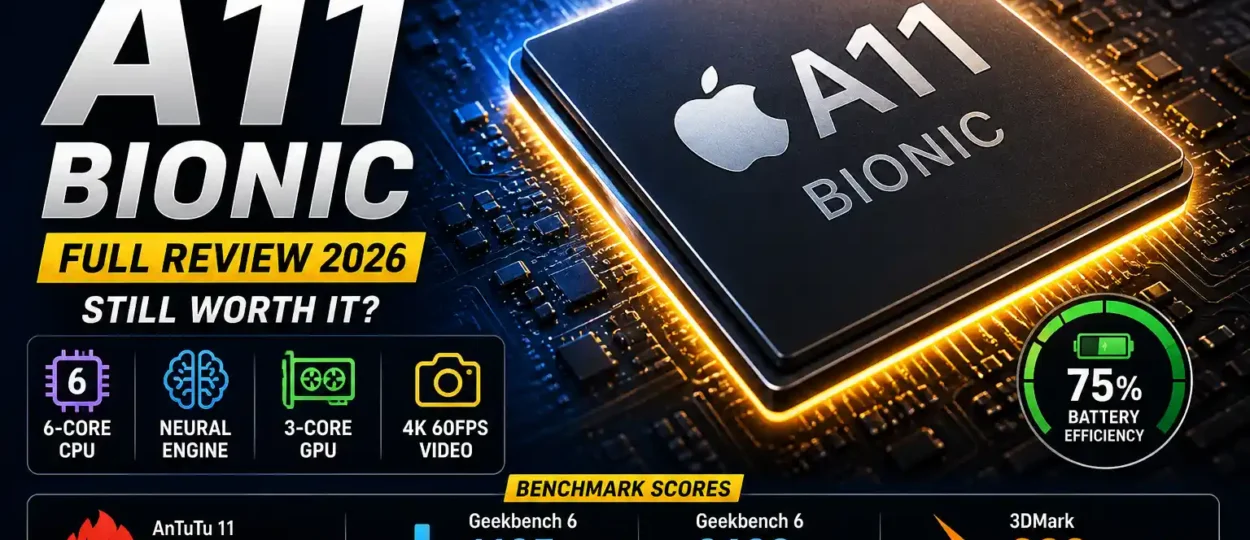
Apple A11 Bionic
Apple A11 Bionic: Benchmarks, Specs, Performance & Is It Still Good in 2026?
Introduction
The Apple A11 Bionic marked a major turning point in smartphone performance when it launched in 2017. At a time when mobile processors were still evolving toward true efficiency and intelligence, Apple introduced a chip that combined raw power, smart resource allocation, and the company’s first dedicated AI engine.
Fast forward to 2026, and the A11 Bionic is no longer a flagship chipset—but it remains surprisingly relevant. Devices powered by this processor, such as the iPhone X and iPhone 8, are still in active use around the world.
So the real question is:
👉 Is the Apple A11 Bionic still usable in 2026, or is it finally outdated?
In this detailed guide, we cover:
- Full specifications and architecture
- Benchmark performance (Geekbench, AnTuTu, 3DMark)
- Real-world usage in 2026
- Strengths and limitations
- Who should still consider it
This is a complete, SEO-optimized breakdown designed to help your content rank and provide real value.
Apple A11 Bionic Overview
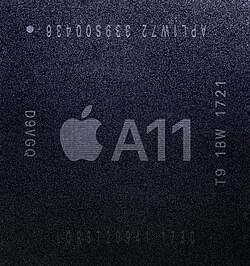
The Apple A11 Bionic is a 64-bit ARM-based system-on-chip designed by Apple and manufactured by TSMC using a 10nm process.
Key Highlights:
- 6-core CPU (2 performance + 4 efficiency cores)
- First Apple Neural Engine
- Custom Apple GPU
- 4.3 billion transistors
- Major efficiency improvements over A10 Fusion
At launch, the A11 Bionic was considered one of the most advanced smartphone processors ever created.
CPU Architecture & Performance
Hybrid 6-Core Design
The A11 Bionic introduced a powerful hybrid CPU design:
- 2× Monsoon performance cores (up to 2.39 GHz)
- 4× Mistral efficiency cores (up to 1.42 GHz)
Unlike its predecessor, the A11 could use all six cores simultaneously, making it more efficient and powerful under load.
Real Performance Improvements
Compared to the A10 Fusion:
- Performance cores: ~25% faster
- Efficiency cores: ~70% faster
This allowed the A11 to:
- Handle demanding tasks smoothly
- Reduce power consumption during light workloads
Geekbench 6 Scores
- Single-Core: ~1105
- Multi-Core: ~2629
What This Means in 2026
- Still decent for basic tasks
- Comparable to budget Android processors
- Noticeably slower than modern flagship chips
GPU Performance & Graphics
The A11 features a custom 3-core Apple GPU, replacing previous third-party solutions.
Key Features:
- 30% faster than A10 GPU
- Support for Metal 2
- Optimized for AR applications
3DMark Performance
- Score: 892
- Stability: 59%
- Average FPS: ~5
Real-World Graphics Performance
In 2026, the GPU:
- Handles casual titles smoothly
- Struggles with modern high-end graphics
- Shows thermal throttling under load
Neural Engine & AI Capabilities
The A11 Bionic introduced Apple’s first Neural Engine.
Specs:
- 2-core design
- ~600 billion operations per second
Use Cases:
- Face ID
- Photo enhancements
- Augmented reality
- Voice processing
AI Performance in 2026
While revolutionary in 2017, the A11’s AI capabilities are now limited:
- Works fine for basic AI tasks
- Struggles with modern AI workloads
- Far behind newer chips like A17 Pro
Memory & Storage
- Memory Type: LPDDR4X
- Max RAM: 4GB
- Bandwidth: 34.1 GB/s
Storage:
- NVMe support
- Fast app loading (still decent today)
Multimedia & Camera Capabilities
The A11 still supports many modern media features:
Video:
- 4K recording at 60FPS
- HEVC and H.264 encoding/decoding
Camera:
- Up to 32MP (single camera)
- Dual 12MP support
Real-World Use:
- Great for casual photography
- Limited compared to newer computational photography systems
Connectivity & Network Limitations
- 4G LTE Cat.12
- No 5G support ❌
- Wi-Fi 5
- Bluetooth 5.0
In 2026:
👉 Lack of 5G is the biggest drawback
However:
- 4G is still usable in most regions
- Stable connectivity for everyday tasks
Benchmark Performance Breakdown
AnTuTu Score
- Total: ~626,912
Category Breakdown:
- CPU: 254,993
- GPU: 116,883
- Memory: 96,795
- UX: 158,241
What This Means
In 2026:
- Entry-level performance
- Suitable for basic tasks
- Not ideal for heavy workloads
Real-World Performance in 2026
Daily Usage
The A11 Bionic still handles:
- Social media apps
- Messaging
- Web browsing
- Video streaming
Smooth performance is possible thanks to Apple’s optimization.
Multitasking
- Moderate multitasking is fine
- Limited by 3GB RAM (on most devices)
Thermal Performance
- Tends to heat under heavy load
- Throttling after extended usage
- Stable for short bursts
Software Support & Longevity
Devices with A11 Bionic:
- Last supported: iOS 16.7.15 (2026)
What This Means:
- Security updates still available
- Limited future OS upgrades
Devices Powered by A11 Bionic
- iPhone 8
- iPhone 8 Plus
- iPhone X
These devices are still widely used in budget markets.
Pros and Cons
✅ Advantages
- Strong optimization with iOS
- Reliable performance for daily tasks
- Good single-core speed
- First Neural Engine innovation
- Affordable second-hand devices
❌ Disadvantages
- No 5G support
- Weak GPU by modern standards
- Limited AI capabilities
- Thermal throttling
- Aging hardware
Who Should Use A11 Bionic in 2026?
Suitable For:
- Budget users
- Secondary phone users
- Basic smartphone needs
Not Suitable For:
- Heavy multitasking
- Advanced AI usage
- High-end graphics workloads
Apple A11 vs Modern Chips
Compared to newer chips like A17 Pro:
- ~3–5x slower in CPU
- Much weaker GPU
- Significantly lower AI performance
However:
👉 Still usable for basic tasks
Final Verdict: Is A11 Bionic Still Worth It?
The Apple A11 Bionic is no longer a powerhouse—but it remains a reliable, entry-level processor in 2026.
Key Takeaways:
- Still usable for daily tasks
- Excellent longevity for its age
- Not suitable for demanding workloads
👉 Final Rating: 6.5 / 10 (2026 standards)
FAQs
Is Apple A11 Bionic still good in 2026?
Yes, for basic tasks like calling, messaging, and browsing.
Does A11 support 5G?
No, it only supports 4G LTE.
Can A11 run modern apps?
Yes, but performance may vary depending on the app.
Is iPhone X still usable?
Yes, but it is best suited for light usage.
Conclusion
The Apple A11 Bionic stands as a testament to Apple’s engineering excellence. Even after nearly a decade, it continues to power devices that remain functional and reliable.
While it cannot compete with modern processors, its efficiency, optimization, and longevity make it one of the most successful mobile chips ever created.