
0
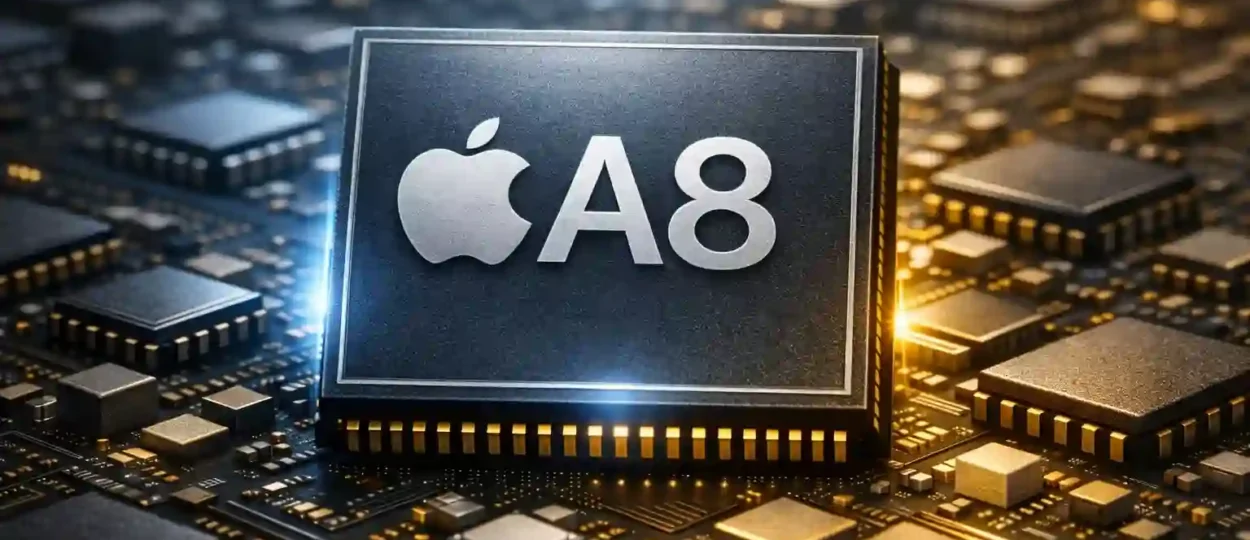
Apple A8 chip
Apple A8 Chip: Benchmarks, Specs, Architecture & Performance Explained
The Apple A8 marked a major step forward in mobile processor design when it was introduced in September 2014 alongside the iPhone 6 lineup. At a time when most smartphone chips were focused on adding more cores, Apple took a different approach—refining efficiency, improving per-core performance, and optimizing real-world responsiveness.
Even today, the A8 remains one of the most interesting processors in Apple’s A-series evolution because it set the foundation for the performance philosophy Apple continues to follow: fewer cores, but smarter and faster ones.
In this detailed guide, we’ll explore everything about the Apple A8—from its architecture and specifications to benchmarks, performance, and long-term impact.
Table of Contents
- Overview
- Architecture & Design
- CPU Performance Analysis
- GPU Performance & Graphics Capabilities
- Benchmarks (Geekbench, Real-World Tests)
- Power Efficiency & Thermal Performance
- Comparison with Apple A7 and A9
- Devices Powered by Apple A8
- Long-Term Software Support
- Real-World Usage Experience
- Advantages & Limitations
- Final Verdict
Apple A8 Overview
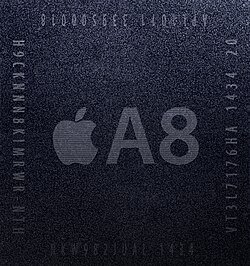
The Apple A8 is a 64-bit ARM-based system-on-chip (SoC) built using a 20nm manufacturing process. It was the successor to the Apple A7 and introduced noticeable improvements in both CPU and GPU performance.
Key Highlights:
- Dual-core CPU with “Typhoon” architecture
- PowerVR GX6450 GPU
- 20nm fabrication (TSMC)
- ~2 billion transistors
- Up to 25% faster CPU performance vs A7
- Up to 50% better graphics performance
Apple focused heavily on efficiency and real-world performance, rather than just increasing raw specifications.
Architecture & Design
A Shift to 20nm Manufacturing
One of the biggest changes in the Apple A8 was the transition from 28nm (A7) to 20nm fabrication. This allowed Apple to:
- Increase transistor count
- Reduce power consumption
- Improve performance per watt
Despite having twice the number of transistors compared to the A7, the chip was actually smaller in size (~89 mm²).
CPU Architecture – Typhoon Cores
The A8 features a dual-core CPU based on Apple’s custom Typhoon architecture, which is essentially an improved version of the Cyclone cores used in the A7.
Core Configuration:
- 2 high-performance cores
- Clock speed: ~1.4 GHz
- 64-bit ARMv8 architecture
Unlike competitors that used 4 or 8 cores, Apple focused on:
- Higher IPC (instructions per clock)
- Better single-core performance
- Lower latency
Why This Matters
Most everyday tasks—like browsing, messaging, and app switching—depend more on single-core performance than multi-core scaling. This is where the A8 excelled.
Cache System
The A8 includes a sophisticated cache hierarchy:
- L1 Cache: 64 KB (data) + 64 KB (instruction) per core
- L2 Cache: 1 MB shared
- L3 Cache: 4 MB system-level cache
This large cache structure played a crucial role in:
- Faster data access
- Reduced memory latency
- Improved efficiency
CPU Performance Analysis
Even though it has just two cores, the Apple A8 delivered performance comparable to or better than many quad-core processors of its time.
Key Strengths:
- Strong single-core performance
- Efficient task handling
- Smooth UI experience
In real-world usage, this meant:
- Faster app launches
- Smooth scrolling
- Responsive multitasking
Apple claimed around 25% improvement in CPU performance compared to the A7, which was noticeable in daily use.
GPU Performance & Graphics Capabilities
The Apple A8 integrates a PowerVR GX6450 GPU, which was a significant upgrade over the A7’s GPU.
GPU Features:
- 4 shader clusters
- Improved rendering performance
- Better power efficiency
- Support for advanced graphics APIs
Performance Improvements:
- Up to 50% better graphics performance
- Smooth handling of high-resolution displays
- Improved video rendering
The GPU was capable of handling:
- High-resolution video playback
- Complex UI animations
- Graphically intensive applications
Benchmark Performance
Benchmarks provide a clearer picture of how the A8 performs compared to other processors.
Geekbench 5 Scores (Approximate)
- Single-Core: ~320–330
- Multi-Core: ~600–630
While these numbers may seem modest today, they were top-tier in 2014.
Real-World Performance
In actual usage, benchmarks don’t tell the full story. The A8 felt faster because of:
- Optimized iOS integration
- Efficient memory handling
- High IPC architecture
Compared to many Android processors of the time, the A8 often delivered:
- Faster UI interactions
- Better app stability
- Consistent performance
Power Efficiency & Thermal Performance
One of the biggest strengths of the Apple A8 was its efficiency.
Key Points:
- TDP: ~5W
- Improved battery life
- Reduced heat generation
Thanks to the 20nm process, the A8 delivered:
- Longer battery life
- Cooler operation
- Stable performance under load
This efficiency is one reason why devices like the iPhone 6 felt smooth even after years of usage.
Apple A8 vs Apple A7
The A8 improved upon the A7 in several key areas:
| Feature | Apple A7 | Apple A8 |
|---|---|---|
| Process | 28nm | 20nm |
| CPU | Cyclone | Typhoon |
| Performance | Baseline | +25% |
| GPU | PowerVR G6430 | GX6450 |
| Efficiency | Good | Much better |
The jump may not look huge on paper, but in real usage, it was very noticeable.
Apple A8 vs Apple A9
The A9, which succeeded the A8, brought even bigger improvements.
| Feature | Apple A8 | Apple A9 |
|---|---|---|
| Process | 20nm | 14/16nm |
| CPU | Dual-core | Dual-core (faster) |
| Performance | Strong | Much stronger |
| GPU | GX6450 | Improved GPU |
The A9 focused more on raw power, while the A8 focused on efficiency.
Devices Powered by Apple A8
The A8 was used in several popular Apple devices:
- iPhone 6
- iPhone 6 Plus
- iPad Mini 4
- iPod Touch (6th Gen)
- Apple TV HD
- HomePod (1st Gen)
These devices benefited from:
- Smooth performance
- Reliable efficiency
- Long software support
Long-Term Software Support
One of the most impressive aspects of the Apple A8 is how long it remained supported.
Software Updates:
- iPhone 6 / 6 Plus → up to iOS 12.5.8
- iPad Mini 4 → up to iPadOS 15.8.7
This means the A8 remained relevant for:
- Over 5–7 years
That level of support is rare in the smartphone industry.
Real-World Usage Experience
Even years after release, devices powered by the A8 still offer:
Everyday Performance:
- Smooth navigation
- Stable app performance
- Reliable multitasking
Limitations:
- Struggles with modern heavy apps
- Limited RAM in some devices
- Older GPU architecture
Still, for basic usage, the A8 remains surprisingly usable.
Advantages of Apple A8
1. High Efficiency
The 20nm process made it power-efficient and cool.
2. Strong Single-Core Performance
Better responsiveness than many competitors.
3. Optimized Ecosystem
iOS and hardware worked seamlessly together.
4. Long Software Support
Extended usability beyond typical lifespan.
Limitations of Apple A8
1. Dual-Core Limitation
Not ideal for heavy multi-core workloads.
2. Older GPU
Struggles with modern graphics demands.
3. Limited RAM Support
Bottleneck in newer applications.
Why Apple A8 Still Matters Today
The Apple A8 may be an older processor, but its design philosophy continues to influence modern chips.
It introduced:
- Better efficiency strategies
- Focus on real-world performance
- Strong CPU-GPU balance
These ideas are still visible in newer chips like the A-series lineup.
Final Verdict
The Apple A8 was more than just a small upgrade—it was a refinement-focused processor that proved performance isn’t just about adding more cores.
Instead, Apple showed that:
- Smart architecture matters more than raw specs
- Efficiency is just as important as power
- Real-world performance is what users actually feel
Even today, the A8 stands as an important milestone in mobile processor evolution.
Conclusion
If you look back at the history of smartphone processors, the Apple A8 represents a turning point. It demonstrated that optimization, efficiency, and intelligent design could outperform brute-force hardware approaches.
While it may no longer compete with modern processors, its impact is still visible in every Apple chip that followed.
If you want to see how Apple improved performance over time, check out the newer Apple A15 Bionic.
For the latest advancements in Apple silicon, explore the flagship Apple A19 Pro.
✅ FAQ Section (Add to Article)
Frequently Asked Questions (FAQ)
1. What is the Apple A8 chip?
The Apple A8 is a 64-bit mobile processor introduced in 2014. It powers devices like the iPhone 6 and features a dual-core CPU, improved graphics, and better efficiency compared to its predecessor.
2. How powerful is the Apple A8 today?
The Apple A8 is still usable for basic tasks like browsing, calling, and light apps. However, it struggles with modern heavy applications due to its older architecture and limited memory support.
3. Which devices use the Apple A8 processor?
Devices powered by the Apple A8 include:
- iPhone 6
- iPhone 6 Plus
- iPad Mini 4
- iPod Touch (6th Generation)
- Apple TV HD
- HomePod (1st Generation)
4. What is the difference between Apple A8 and A7?
Compared to the Apple A7, the A8 offers:
- Around 25% better CPU performance
- Up to 50% better graphics performance
- Improved energy efficiency
5. Does the Apple A8 support modern iOS versions?
No, the Apple A8 officially supports up to iOS 12 on iPhones and iPadOS 15 on iPads. It no longer receives major updates.
6. Is Apple A8 good for long-term use?
For basic usage, yes. But for long-term modern usage, it is limited due to outdated hardware and lack of software updates.
7. What GPU is used in Apple A8?
The Apple A8 uses a PowerVR GX6450 GPU, which was one of the most powerful mobile GPUs at the time of release.
8. What makes Apple A8 special?
The Apple A8 stands out for:
- High efficiency
- Strong single-core performance
- Optimized real-world performance
- Related Processor Articles
- 👉 Read our detailed review of the Apple A14 Bionic (Predecessor analysis)
- 👉 Full benchmarks of the Apple A16 Bionic (Next-gen performance)
- 👉 Flagship comparison with Apple A17 Pro (3nm architecture)
- 👉 Competitor analysis: Qualcomm Snapdragon 8 Gen 1
- 👉 Improved version review: Qualcomm Snapdragon 8 Gen 2
- 👉 Latest flagship comparison: Qualcomm Snapdragon 8 Gen 3