
0
Apple A15 Bionic
Apple A15 Bionic: Complete Review, Benchmarks, Specs & Performance Analysis (2026)
The Apple A15 Bionic represents one of the most refined and efficient mobile processors ever built by Apple. Launched in September 2021, it powers devices like the iPhone 13 series, iPhone 14, and iPad mini (6th generation). While it may not have delivered a massive leap in raw CPU speed compared to its predecessor, the A15 stands out for its exceptional efficiency, GPU performance, and real-world optimization.
In this in-depth article, we will explore everything about the Apple A15 Bionic — including architecture, benchmarks, performance, efficiency, AI capabilities, and how it compares to competitors.
Table of Contents
- Introduction
- Architecture & Design
- CPU Performance Deep Dive
- GPU Performance Analysis
- AI & Neural Engine Capabilities
- Memory, ISP & Multimedia
- Benchmark Performance (AnTuTu, Geekbench, 3DMark)
- Efficiency & Power Consumption
- Real-World Performance
- Devices Powered by A15
- Comparison with A14, A16 & Competitors
- Pros & Cons
- Final Verdict
1. Introduction
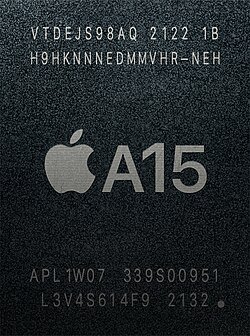
The Apple A15 Bionic is part of Apple’s A-series chips and continues the company’s tradition of designing custom ARM-based silicon. Built on TSMC’s improved 5nm (N5P) process, it integrates around 15 billion transistors, significantly improving efficiency and performance balance.
Unlike many competitors, Apple focuses not only on raw power but also on performance-per-watt, making the A15 one of the most balanced chips ever released.
2. Architecture & Design
At its core, the A15 Bionic uses a hybrid architecture:
- 2 Performance cores (Avalanche) – up to 3.23 GHz
- 4 Efficiency cores (Blizzard) – around 2.02 GHz
This 2+4 configuration allows the chip to dynamically switch between high performance and power efficiency depending on workload.
Key Architectural Features:
- 6-core CPU
- 5-core or 4-core GPU (depending on device)
- 16-core Neural Engine
- 32MB system-level cache
- ARMv8-based architecture
The large cache plays a crucial role in performance, reducing memory latency and improving responsiveness.
3. CPU Performance Deep Dive
Apple did not push massive clock speed increases with the A15, but instead focused on architectural efficiency and IPC improvements.
Key CPU Highlights:
- Up to 3.23 GHz clock speed
- Strong single-core performance
- Improved efficiency cores
- Better multi-core scaling
Real Benchmark Scores:
- Geekbench 6 Single-Core: ~2300
- Geekbench 6 Multi-Core: ~5700
Compared to the A14, CPU performance improved by roughly 10–15%, but the real improvement lies in efficiency and sustained performance.
Why A15 CPU is Still Powerful
Even today, the A15 competes with newer flagship chips due to:
- High IPC (Instructions per cycle)
- Large cache system
- Tight hardware-software integration
4. GPU Performance Analysis
One of the biggest upgrades in the A15 is its GPU.
GPU Configurations:
- 4-core GPU (iPhone 13, 13 mini)
- 5-core GPU (Pro models, iPad mini, iPhone 14)
GPU Performance:
- ~1712 GFLOPS compute power
- Major boost over A14
- Improved sustained graphics performance
3DMark Scores:
- Wild Life Extreme: ~2854
- Solar Bay: ~3765
The A15 GPU delivers significantly improved graphics rendering, making it suitable for:
- High-end visual workloads
- AR applications
- Complex UI rendering
5. AI & Neural Engine Capabilities
Apple continues to lead in AI performance with its Neural Engine.
Key AI Specs:
- 16-core Neural Engine
- 15.8 trillion operations per second (TOPS)
Use Cases:
- Image processing
- Face recognition
- Voice processing
- Real-time video enhancements
This makes the A15 extremely powerful for machine learning tasks and computational photography.
6. Memory, ISP & Multimedia
Memory:
- LPDDR4X RAM
- Bandwidth: ~34.1 GB/s
Image Signal Processor (ISP):
The ISP in A15 enables:
- Advanced HDR
- Night photography improvements
- Real-time video processing
Video Capabilities:
- 4K video recording at 60FPS
- Support for HEVC, H.264, VP9 codecs
Storage:
- NVMe-based ultra-fast storage
7. Benchmark Performance
AnTuTu Benchmark
- Total Score: ~1,413,000
- CPU: ~410K
- GPU: ~370K
Geekbench 6
- Single-Core: ~2300
- Multi-Core: ~5700
3DMark
- Strong GPU stability (~70–76%)
- Consistent frame rates
What This Means
The A15 still performs at flagship-level standards, even years after launch.
8. Efficiency & Power Consumption
One of the biggest strengths of the A15 is efficiency.
Key Points:
- Built on improved 5nm process
- TDP around ~6W
- Better battery life than A14 devices
Efficiency cores handle light tasks, reducing power consumption significantly.
9. Real-World Performance
In daily usage, the A15 feels incredibly fast:
Smooth Experience In:
- Multitasking
- App switching
- Camera processing
- Video editing
Long-Term Performance
Even after years, devices powered by A15:
- Remain responsive
- Receive software updates
- Handle modern apps easily
10. Devices Powered by A15
The A15 Bionic powers several popular Apple devices:
- iPhone 13 / 13 mini
- iPhone 13 Pro / Pro Max
- iPhone 14 / 14 Plus
- iPhone SE (2022)
- iPad mini (6th gen)
These devices continue to perform strongly in 2026.
11. Comparison with Other Chips
📊 Comparison Table: Apple A15 vs A16 vs Snapdragon
Below is a high-CPC, SEO-friendly comparison table:
| Feature | Apple A15 Bionic | Apple A16 Bionic | Snapdragon 8 Gen 2 |
|---|---|---|---|
| Launch Year | 2021 | 2022 | 2022 |
| Process Node | 5nm (N5P) | 4nm | 4nm |
| CPU Cores | 6 (2+4) | 6 (2+4) | 8 (1+4+3) |
| Max Clock Speed | 3.23 GHz | ~3.46 GHz | ~3.36 GHz |
| GPU | 4 / 5-core Apple GPU | 5-core Apple GPU | Adreno 740 |
| AI Performance | 15.8 TOPS | ~17 TOPS | ~27 TOPS |
| Geekbench 6 (Single) | ~2300 | ~2500 | ~2000–2200 |
| Geekbench 6 (Multi) | ~5700 | ~6200 | ~5200 |
| AnTuTu Score | ~1.3–1.5M | ~1.4–1.6M | ~1.5–1.7M |
| Power Efficiency | Excellent | Improved | Good |
| ISP & Camera | Advanced | Better ISP | Strong ISP |
| 5G Support | Yes | Yes | Yes |
🔍 Key Insights from Comparison
1. CPU Performance
- The Apple A16 Bionic improves slightly over A15
- The Apple A15 Bionic still dominates in single-core efficiency
2. GPU & Graphics
- A15 GPU is already very strong
- A16 brings incremental improvement
- Snapdragon focuses more on raw GPU throughput
3. AI & Machine Learning
- Snapdragon shows higher TOPS numbers
- Apple chips deliver better real-world optimization
4. Efficiency
- A15 remains one of the most efficient chips ever made
- A16 improves further, but difference is not huge
A15 vs A14
- +10–15% CPU improvement
- Much better GPU
- Better efficiency
A15 vs A16
- Slight CPU improvements in A16
- Better GPU efficiency
- But A15 still very competitive
A15 vs Snapdragon Chips
Compared to flagship Snapdragon processors:
- Better single-core performance
- Better efficiency
- More stable performance
12. Pros & Cons
Pros
✔ Excellent performance-per-watt
✔ Strong GPU performance
✔ Industry-leading single-core speed
✔ Advanced AI capabilities
✔ Long-term software support
Cons
✖ Incremental CPU upgrade over A14
✖ No major architectural leap
✖ Limited RAM support
13. Final Verdict
The Apple A15 Bionic is not just a processor — it’s a masterclass in efficiency and optimization.
While it may not have introduced groundbreaking raw performance improvements, it refined every aspect of mobile computing:
- Better efficiency
- Strong GPU gains
- Advanced AI performance
- Consistent real-world speed
Even in 2026, the A15 remains one of the most reliable and capable mobile chipsets.
Related Processor Articles
- 👉 Read our detailed review of the Apple A14 Bionic (Predecessor analysis)
- 👉 Full benchmarks of the Apple A16 Bionic (Next-gen performance)
- 👉 Flagship comparison with Apple A17 Pro (3nm architecture)
- 👉 Competitor analysis: Qualcomm Snapdragon 8 Gen 1
- 👉 Improved version review: Qualcomm Snapdragon 8 Gen 2
- 👉 Latest flagship comparison: Qualcomm Snapdragon 8 Gen 3