
0
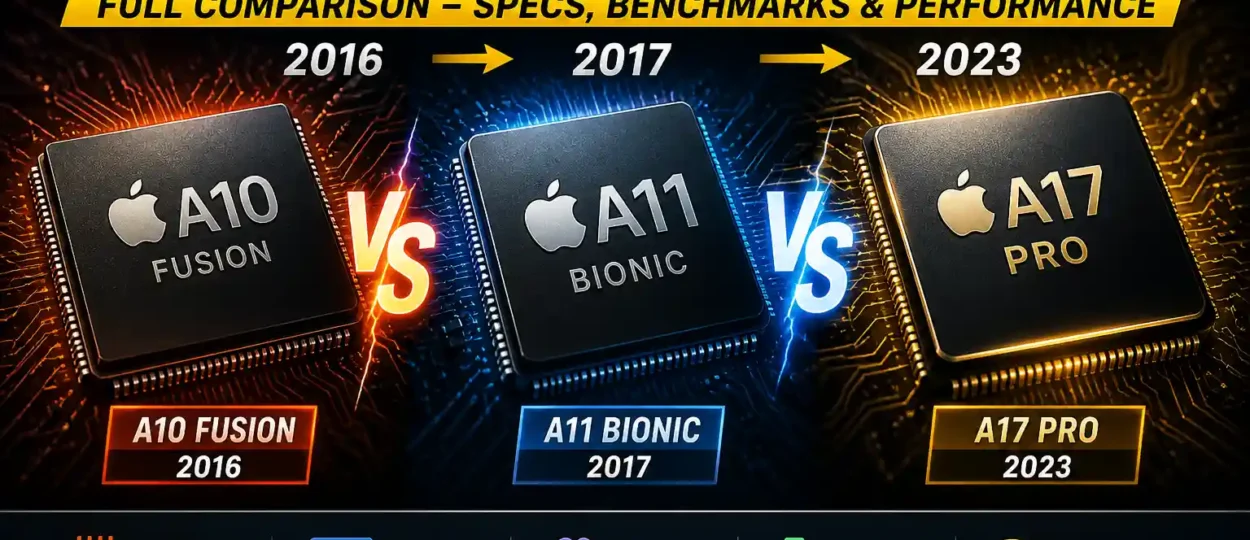
Apple A10 Fusion vs Apple A11 Bionic vs Apple A17 Pro– Complete Apple Processor Comparison (2026 Review)
Apple A10 Fusion vs Apple A11 Bionic vs Apple A17 Pro
Full Comparison: Performance, Architecture, Benchmarks & Real-World Use (2026)
When analyzing the evolution of mobile processors, few companies have pushed innovation as aggressively as Apple Inc.. From the introduction of the Apple A10 Fusion in 2016 to the cutting-edge Apple A17 Pro, Apple’s silicon journey represents one of the most dramatic performance leaps in computing history.
This in-depth comparison explores A10 vs A11 vs A17 Pro, covering architecture, CPU, GPU, AI, benchmarks, power efficiency, and real-world usability in 2026.
📌 Table of Contents
- Overview of Apple Silicon Evolution
- Apple A10 Fusion Overview
- Apple A11 Bionic Overview
- Apple A17 Pro Overview
- CPU Performance Comparison
- GPU Performance Comparison
- AI & Neural Engine Evolution
- Benchmark Comparison (AnTuTu, Geekbench, 3DMark)
- Power Efficiency & Process Node
- Real-World Usage in 2026
- Which Processor is Best?
- Final Verdict
🚀 Apple Silicon Evolution: A Quick Look
Apple’s chip strategy focuses on:
- Custom CPU cores
- Tight hardware-software integration
- Industry-leading efficiency
Timeline:
- 2016: Apple A10 Fusion – First quad-core hybrid design
- 2017: Apple A11 Bionic – First Neural Engine
- 2023: Apple A17 Pro – First 3nm chip with hardware ray tracing
🔵 Apple A10 Fusion – The Beginning of Hybrid Power
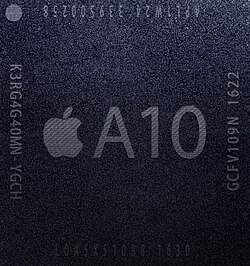
The Apple A10 Fusion marked a major turning point as Apple’s first big.LITTLE architecture chip.
Key Specs:
- 4 cores (2× Hurricane + 2× Zephyr)
- 16nm TSMC process
- Clock speed: up to 2.34 GHz
- GPU: PowerVR GT7600 Plus
- Transistors: ~3.3 billion
Key Innovation:
- First hybrid CPU design (performance + efficiency cores)
- Smart core switching (not simultaneous usage)
Used In:
- iPhone 7
- iPhone 7 Plus
- iPad 7th generation
Performance Insight (2026):
- Still usable for:
- Calling, messaging
- Light browsing
- Basic apps
But struggles with:
- Heavy multitasking
- Modern apps
- Advanced graphics workloads
🟡 Apple A11 Bionic – The AI Revolution Begins
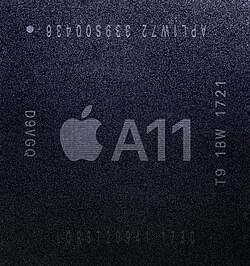
The Apple A11 Bionic introduced a revolutionary change: Neural Engine.
Key Specs:
- 6 cores (2× Monsoon + 4× Mistral)
- 10nm process
- First Apple GPU (3-core)
- Neural Engine: 600 billion ops/sec
- Transistors: 4.3 billion
Major Breakthrough:
- All 6 cores can run simultaneously
- Dedicated AI processing hardware
Used In:
- iPhone 8
- iPhone X
Improvements Over A10:
- +25% CPU performance
- +70% efficiency core boost
- +30% GPU performance
Real-World Impact:
- Face ID
- Portrait lighting
- AR applications
🔴 Apple A17 Pro – Desktop-Class Power in Your Pocket

The Apple A17 Pro is a massive leap forward, built on cutting-edge 3nm technology.
Key Specs:
- 6 cores (2 performance + 4 efficiency)
- Clock speed: ~3.7–4.0 GHz
- GPU: 6-core with hardware ray tracing
- Neural Engine: 35 TOPS
- Transistors: ~19 billion
Major Innovations:
- Hardware ray tracing
- Mesh shading
- AV1 decoding
- Massive AI acceleration
Used In:
- iPhone 15 Pro
- iPhone 15 Pro Max
⚙️ CPU Performance Comparison
| Feature | A10 Fusion | A11 Bionic | A17 Pro |
|---|---|---|---|
| Cores | 4 | 6 | 6 |
| Architecture | Hybrid (limited) | Full multi-core | Advanced hybrid |
| Clock Speed | 2.34 GHz | ~2.39 GHz | ~4 GHz |
| Performance Level | Entry | Mid-range | Flagship |
Key Insights:
- A10 uses cluster switching → limited multitasking
- A11 enables full multi-core usage
- A17 delivers desktop-level performance
🎮 GPU Performance Comparison
| Feature | A10 | A11 | A17 Pro |
|---|---|---|---|
| GPU | PowerVR | Apple GPU | Apple GPU (Pro) |
| Graphics Power | Basic | Moderate | Extreme |
| Special Features | None | Metal optimized | Ray tracing |
Real Difference:
🧠 AI & Neural Engine Evolution
Evolution:
📊 Benchmark Comparison
AnTuTu Scores
- A10 Fusion: ~210K – 300K
- A11 Bionic: ~400K
- A17 Pro: 1.6M+
Geekbench 6
👉 Massive generational jump:
A17 Pro is ~6–7x faster than A10
🔋 Power Efficiency & Process Node
Why It Matters:
- Smaller node = less power + more performance
- A17 achieves higher performance with lower power consumption
📱 Real-World Usage in 2026
A10 Fusion
✔ Calls, messaging
✔ Light apps
❌ Heavy apps
❌ Modern multitasking
A11 Bionic
✔ Smooth daily usage
✔ Moderate multitasking
✔ Decent camera processing
❌ Limited future support
A17 Pro
✔ Extreme performance
✔ AI workloads
✔ High-end apps
✔ Long-term future-proof
⚔️ A10 vs A11 vs A17 – Key Differences
Biggest Jumps:
- A10 → A11
- Neural Engine introduced
- Better multitasking
- A11 → A17
- Massive performance leap
- 3nm efficiency
- Ray tracing + AI
🏆 Which Processor Should You Choose?
Choose A10 Fusion if:
- Ultra-budget usage
- Backup device
Choose A11 Bionic if:
- Basic modern usage
- Budget iPhone
Choose A17 Pro if:
- Best performance
- Long-term investment
- Advanced features
📌 Final Verdict
The journey from Apple A10 Fusion → A11 Bionic → A17 Pro shows how far mobile processors have evolved:
- A10 Fusion introduced hybrid cores
- A11 Bionic brought AI into smartphones
- A17 Pro delivers desktop-class performance
👉 If you compare raw power:
Frequently Asked Questions (FAQ)
What is the Apple A10 Fusion processor?
The Apple A10 Fusion is a 64-bit ARM-based mobile processor designed by Apple and launched in September 2016. It was the first Apple chip to feature a quad-core design with a combination of high-performance and energy-efficient cores.
Which devices use the Apple A10 Fusion chip?
The Apple A10 Fusion was used in:
- iPhone 7
- iPhone 7 Plus
- iPad (6th generation)
- iPad (7th generation)
- iPod touch (7th generation)
How many cores does the Apple A10 Fusion have?
The chip has a total of 4 cores:
- 2 high-performance “Hurricane” cores
- 2 power-efficient “Zephyr” cores
However, only one set of cores runs at a time for better efficiency.
Is the Apple A10 Fusion still good in 2025?
The A10 Fusion is still usable for basic tasks like:
- Calling and messaging
- Web browsing
- Video streaming
However, it struggles with heavy apps and modern workloads compared to newer processors.
What is the AnTuTu score of Apple A10 Fusion?
The Apple A10 Fusion typically scores around:
- ~210,000 (older AnTuTu versions)
- ~500,000+ (newer AnTuTu versions)
Scores may vary depending on device and software version.
How powerful is the Apple A10 Fusion GPU?
The chip includes a PowerVR GT7600 Plus GPU, which delivers:
- Up to 50% better graphics performance than A9
- Smooth performance for basic and mid-level graphics tasks
But it lacks modern technologies found in newer GPUs.
Does the Apple A10 Fusion support 5G?
No, the A10 Fusion does not support 5G connectivity.
It supports 4G LTE (up to Cat. 12 speeds).
What is the manufacturing process of the A10 Fusion?
The Apple A10 Fusion is built on a 16nm FinFET process by TSMC, which was advanced at the time but is outdated compared to modern 3nm chips.
Does the Apple A10 Fusion have a Neural Engine?
No, the A10 Fusion does not include a dedicated Neural Engine.
AI and machine learning tasks are handled by CPU and GPU.
How does A10 Fusion compare to A11 Bionic?
Compared to the A10 Fusion, the A11 Bionic offers:
- Better CPU performance (~25% faster)
- Dedicated Neural Engine
- Ability to use all cores simultaneously
- Improved efficiency and graphics
What is the maximum RAM supported by A10 Fusion?
The chip supports up to 3GB of LPDDR4 RAM, depending on the device.
Is A10 Fusion good for long-term use?
For long-term use in 2026 and beyond:
- Good for basic usage
- Not ideal for heavy multitasking or advanced apps
What makes the A10 Fusion special?
Key highlights:
- First Apple quad-core mobile processor
- Big.LITTLE architecture introduction
- Strong performance leap over A9
- Efficient power management system