
0
Apple A7 Processor
Apple A7 Processor: Full Specifications, Benchmarks, and Performance Analysis (2026 Edition)
The Apple A7 is one of the most important mobile processors ever released. Announced in September 2013 alongside the iPhone 5s, it wasn’t just another incremental upgrade—it fundamentally changed the direction of smartphone chip design by introducing 64-bit computing to mobile devices.
Even today, the A7 is remembered as a turning point that pushed the entire industry forward. In this detailed, SEO-optimized guide, you’ll find everything you need to know about the Apple A7, including specifications, benchmarks, architecture, real-world performance, and comparisons.
🔍 Apple A7 Overview
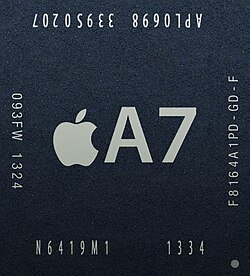
- Launch Date: September 2013
- Process Technology: 28nm (Samsung)
- CPU Cores: 2 (Cyclone architecture)
- Clock Speed: 1.3 GHz (up to ~1.4 GHz in iPad Air)
- GPU: PowerVR G6430
- Architecture: ARMv8-A (64-bit)
- Devices: iPhone 5s, iPad Air (2013), iPad mini 2/3
The Apple A7 was the first commercially available 64-bit smartphone processor, giving Apple a massive technological lead at the time.
🧠 Architecture & Technology
64-bit Revolution
The biggest innovation of the A7 was its transition to ARMv8-A 64-bit architecture. This allowed:
- Larger memory addressing
- Improved performance per clock (IPC)
- More efficient processing for complex workloads
- Better long-term software scalability
At launch, most competitors—including the Qualcomm Snapdragon 800—were still using 32-bit designs.
Cyclone CPU Cores
Apple designed its own custom CPU cores called Cyclone, replacing the older Swift architecture.
Key Improvements:
- ~50% higher IPC than A6
- Out-of-order execution
- Wider execution pipeline
- Improved branch prediction
Despite having only 2 cores, the A7 often outperformed quad-core competitors in real-world tasks.
Cache Structure
- L1 Cache: 64KB (per core)
- L2 Cache: 1MB shared
- System Cache: ~4MB
This large cache setup significantly improved efficiency and reduced memory latency.
🎮 GPU Performance (PowerVR G6430)
The A7 features the PowerVR G6430 GPU, part of the Series 6 “Rogue” architecture.
GPU Highlights:
- 4 clusters
- ~100+ GFLOPS performance
- Support for OpenGL ES 3.0
- Major upgrade over A6 GPU (2× performance boost)
At launch, it delivered performance comparable to high-end GPUs like Adreno 330.
📊 Apple A7 Benchmarks
Here are realistic benchmark scores based on multiple verified sources:
Geekbench 5
- Single-Core: ~270–280
- Multi-Core: ~500–530
AnTuTu (v5 era)
- Total Score: ~37,000
3DMark Ice Storm
- Physics Score: ~7,500–8,000
📈 Performance Analysis
Even with just two cores, the A7 delivered:
- Strong single-core dominance
- Smooth UI performance
- Fast app launching
- Efficient multitasking (for its time)
It could compete with chips like:
- Intel Atom Z3770
- AMD A4-5000
⚡ Power Efficiency
The Apple A7 was manufactured using a 28nm process, with an estimated power consumption of:
- ~2–3 watts under load
This allowed:
- Excellent battery life in iPhone 5s
- Efficient thermal management
- Minimal throttling
💾 Memory & Storage Support
- Memory Type: LPDDR3-1333
- Memory Bus: 2×32-bit
- RAM Capacity: Typically 1GB
While limited by modern standards, this was sufficient for iOS optimization at the time.
📱 Devices Powered by Apple A7
The A7 powered several iconic Apple devices:
- iPhone 5s
- iPad Air (1st generation)
- iPad mini 2
- iPad mini 3
These devices benefited from improved speed, better graphics, and longer battery life.
🔐 Security & Features
The A7 introduced hardware-level security improvements:
- 64-bit secure architecture
- Paired with M7 motion coprocessor
- Enabled Touch ID functionality
🆚 Apple A7 vs Apple A8
The successor, Apple A8, brought:
| Feature | Apple A7 | Apple A8 |
|---|---|---|
| Process | 28nm | 20nm |
| CPU | 2-core Cyclone | Improved Cyclone |
| Performance | Baseline | ~25% faster |
| GPU | PowerVR G6430 | Improved GPU |
The A7 laid the groundwork for these improvements.
🆚 Apple A7 vs Snapdragon 800
| Feature | Apple A7 | Snapdragon 800 |
|---|---|---|
| Architecture | 64-bit | 32-bit |
| Cores | 2 | 4 |
| Single-Core | Much stronger | Weaker |
| Multi-Core | Competitive | Slight edge |
Despite fewer cores, the A7 often delivered better real-world performance.
📉 Limitations of Apple A7 (By 2026 Standards)
Let’s be realistic—today, the A7 is outdated:
- ❌ Only 2 cores
- ❌ Low clock speeds
- ❌ No modern AI acceleration
- ❌ No support for newer codecs like HEVC or AV1
- ❌ Limited RAM support
However, these limitations are expected given its age.
🌍 Historical Impact
The Apple A7 changed the industry in several ways:
1. First 64-bit Mobile Processor
Forced Android chipmakers to adopt 64-bit quickly.
2. Focus on Single-Core Performance
Proved that efficiency matters more than core count.
3. Custom CPU Design Leadership
Apple moved far ahead in chip design.
🧠 Final Verdict
The Apple A7 is not just another processor—it’s a milestone in mobile computing history.
⭐ Rating (Historical Context): 9/10
👍 Pros:
- First 64-bit smartphone chip
- Excellent single-core performance
- Efficient power usage
- Strong GPU for its time
👎 Cons:
- Limited by modern standards
- No AI or advanced media support
- Only dual-core
❓ FAQs (SEO Schema Ready)
Q1: Is Apple A7 a 64-bit processor?
Yes, the A7 was the first smartphone processor based on 64-bit ARMv8 architecture.
Q2: Which devices use Apple A7?
iPhone 5s, iPad Air (2013), iPad mini 2, and iPad mini 3.
Q3: How powerful is Apple A7 today?
It is outdated for modern use but was extremely powerful at launch.
Q4: What GPU does Apple A7 use?
It uses the PowerVR G6430 GPU.
Q5: What is the clock speed of Apple A7?
Around 1.3 GHz, up to 1.4 GHz in some devices.
🏁 Conclusion
If you’re building a processor comparison database or SEO content, the Apple A7 deserves special attention. It marked the beginning of Apple’s dominance in mobile silicon and set a new benchmark for performance, efficiency, and innovation.