
0
Apple A4
Apple A4: The Chip That Started Apple’s Silicon Revolution
The Apple A4 is one of the most important processors in the history of mobile technology. Introduced in 2010, it marked the beginning of Apple’s journey toward designing its own custom silicon. While today’s chips like the A17 Pro and A18 dominate performance charts, the A4 laid the foundation for everything that followed.
This article explores the Apple A4 in depth — including its architecture, performance, features, real-world impact, and why it remains a milestone in smartphone evolution.
Introduction to Apple A4
The Apple A4 was officially announced in April 2010 alongside the first-generation iPad and later powered the iPhone 4, one of Apple’s most iconic devices.
At a time when most smartphone manufacturers relied on third-party chipmakers like Qualcomm or Samsung, Apple took a bold step by introducing its own system-on-chip (SoC). This move allowed Apple to tightly integrate hardware and software, resulting in better performance and efficiency.
Key Specifications of Apple A4
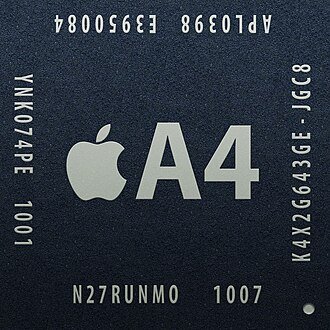
Here are the core technical specifications of the Apple A4:
| Specification | Details |
|---|---|
| CPU Architecture | ARM Cortex-A8 |
| Clock Speed | 1.0 GHz |
| Manufacturing | 45nm |
| GPU | PowerVR SGX535 |
| RAM Support | 512MB |
| Cores | Single-core |
| ISA | ARMv7 |
| Devices | iPhone 4, iPad (1st Gen), iPod Touch (4th Gen) |
Architecture and Design
ARM Cortex-A8 Core
The Apple A4 is built around a single-core ARM Cortex-A8 CPU, which was considered high-performance for its time. It uses a superscalar architecture capable of executing multiple instructions per cycle.
The Cortex-A8 introduced:
- Out-of-order execution
- Advanced branch prediction
- Improved pipeline efficiency
These features allowed the A4 to deliver smoother performance compared to older ARM11-based processors.
Custom Apple Optimization
Although based on ARM’s Cortex-A8 design, Apple customized the A4 to suit its ecosystem. This included:
- Better power management
- Optimized instruction scheduling
- Tight integration with iOS
This level of control gave Apple a major advantage over competitors using generic chip designs.
45nm Fabrication Process
The A4 was manufactured using a 45nm process, which was standard for high-end chips in 2010. While this may seem outdated today, it provided a good balance between:
- Performance
- Power efficiency
- Thermal output
GPU Performance: PowerVR SGX535
The Apple A4 includes a PowerVR SGX535 GPU, which was a strong performer at the time.
Key GPU Features:
- OpenGL ES 2.0 support
- Hardware acceleration for graphics
- Smooth UI rendering
Compared to previous iPhone chips, the GPU delivered significantly better visual performance, enabling:
- Smooth animations
- Improved app rendering
- Enhanced multimedia playback
Memory and Storage Handling
The A4 was paired with 512MB of RAM, which was considered sufficient in 2010.
Storage Variants:
- 8GB
- 16GB
- 32GB
Although limited by today’s standards, Apple’s software optimization ensured efficient memory usage.
Performance Analysis
Real-World Performance
In real-world usage, the Apple A4 delivered:
- Fast app launching
- Smooth scrolling
- Stable multitasking (within limits)
The chip was particularly strong in:
- UI responsiveness
- Web browsing (for its time)
- Media playback
Benchmark Perspective
While modern benchmarks weren’t widely standardized in 2010, later comparisons show that the A4:
- Outperformed many early Android processors
- Delivered consistent single-core performance
- Was competitive with early Snapdragon chips
Power Efficiency and Battery Life
One of the biggest strengths of the Apple A4 was its power efficiency.
Key Highlights:
- Optimized for low power consumption
- Efficient CPU-GPU balance
- Improved battery life in devices
For example, the iPhone 4 with A4 offered:
- Up to 7 hours of talk time (3G)
- Up to 300 hours standby
This efficiency was a major selling point at the time.
Apple A4 in iPhone 4
The iPhone 4 was the most popular device powered by the A4 chip.
Why the Combination Worked:
- Retina display + A4 optimization
- Smooth iOS 4 experience
- Improved multitasking
The A4 ensured that the iPhone 4 delivered a premium experience, even with limited hardware by modern standards.
Apple A4 in iPad (1st Generation)
The first-generation iPad also featured the A4 chip.
Impact on Tablets:
- Smooth browsing experience
- Stable app performance
- Efficient battery usage
The A4 helped establish the iPad as a new product category.
Comparison with Competitors
At launch, the Apple A4 competed with:
- Qualcomm Snapdragon S1
- Samsung Hummingbird
- TI OMAP processors
Advantages of A4:
- Better optimization with iOS
- More stable performance
- Superior power efficiency
Limitations:
- Single-core design
- Limited multitasking capability
- Lower clock speeds compared to later chips
Evolution: From A4 to A-Series Dominance
The Apple A4 was just the beginning.
Successor:
- Apple A5 (dual-core upgrade)
Key Improvements in Later Chips:
- Multi-core CPUs
- Advanced GPUs
- AI and neural engines
- 64-bit architecture (introduced in A7)
The A4 laid the groundwork for Apple’s long-term silicon strategy.
Software Optimization: iOS Advantage
One of the biggest reasons behind the A4’s success was iOS optimization.
Benefits:
- Efficient memory usage
- Smooth animations
- Minimal lag
Apple controlled both hardware and software, allowing it to extract maximum performance from limited resources.
Limitations of Apple A4
While revolutionary, the A4 had its limitations:
1. Single-Core Performance Ceiling
As apps became more complex, single-core processing became a bottleneck.
2. Limited RAM Support
512MB RAM restricted multitasking capabilities.
3. Outdated Graphics (by modern standards)
The GPU, while strong in 2010, quickly became outdated.
Legacy of Apple A4
The Apple A4 remains a historic milestone in mobile computing.
Why It Matters:
- First Apple-designed SoC
- Set the stage for A-series chips
- Demonstrated the power of vertical integration
Without the A4, chips like the A17 Pro or A18 wouldn’t exist in their current form.
Apple A4 vs Apple A7 (Quick Perspective)
| Feature | Apple A4 | Apple A7 |
|---|---|---|
| Architecture | 32-bit | 64-bit |
| Cores | 1 | 2 |
| Clock Speed | 1.0 GHz | 1.3 GHz |
| GPU | SGX535 | PowerVR G6430 |
| Process | 45nm | 28nm |
The jump from A4 to A7 shows how rapidly mobile processors evolved.
Real-World Usage Today
In 2026, devices powered by the Apple A4 are considered obsolete for daily use.
However, they are still:
- Popular among collectors
- Used for legacy applications
- Studied for historical significance
Interesting Facts About Apple A4
- First Apple chip used in both smartphone and tablet
- Built with Samsung manufacturing support
- Focused heavily on efficiency rather than raw power
- Played a key role in the success of iPhone 4
Final Verdict: Is Apple A4 Important Today?
The Apple A4 may not compete with modern processors, but its importance cannot be overstated.
Pros:
✔ First step into custom silicon
✔ Strong optimization with iOS
✔ Excellent efficiency for its time
Cons:
✘ Single-core limitation
✘ Limited RAM support
✘ Not suitable for modern apps
Conclusion
The Apple A4 was more than just a processor — it was a turning point in the tech industry. By designing its own chip, Apple gained control over performance, efficiency, and user experience.
Even today, the influence of the A4 can be seen in every Apple chip that followed. It marked the beginning of a journey that would eventually redefine mobile computing.
If you’re exploring the history of smartphones or the evolution of processors, the Apple A4 is a perfect place to start.